The New Panchayat Amendment in West Bengal : Reforming Grassroots Democracy.
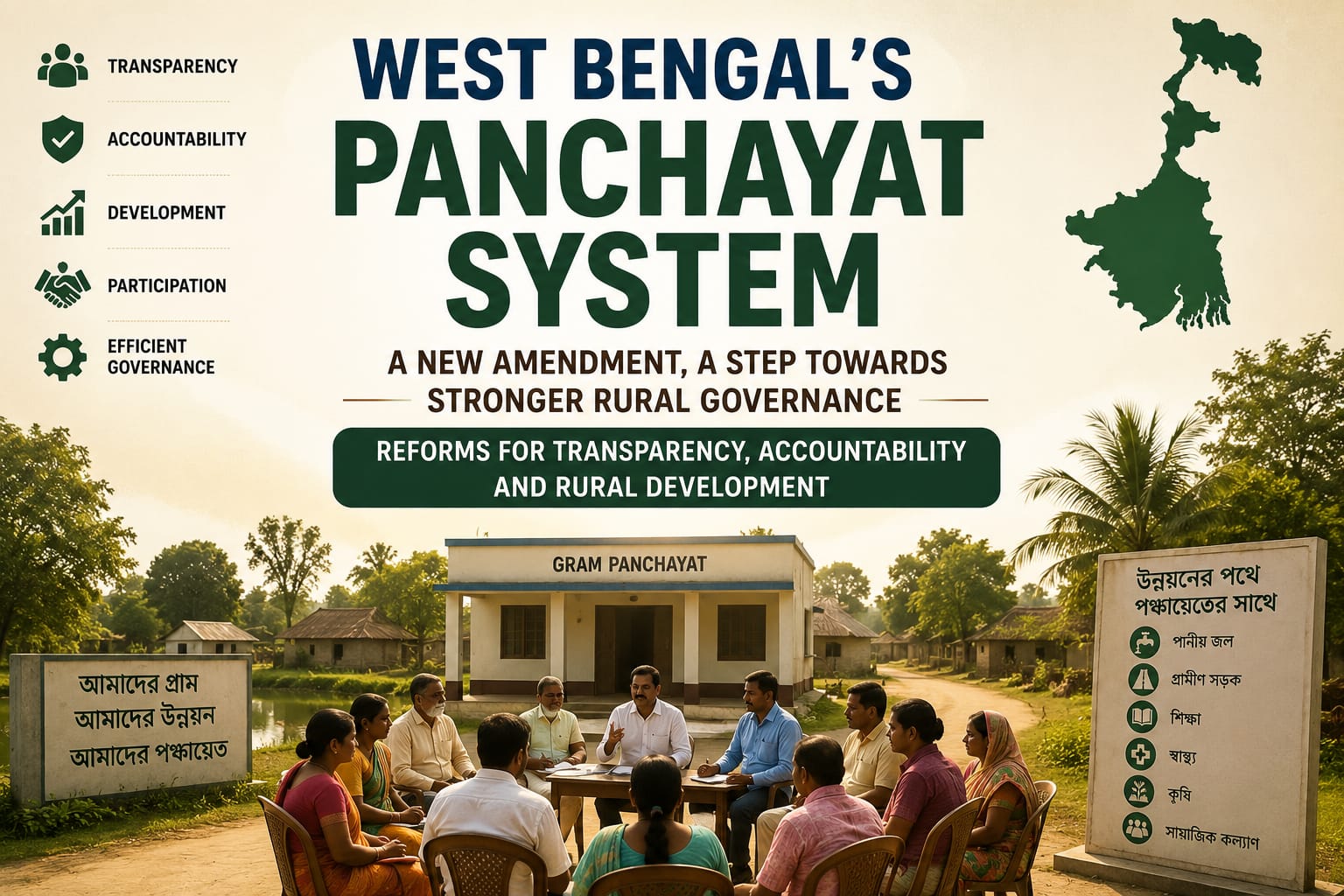
The panchayat system is the foundation of rural self - government in India. It seems as the closest link between the government and serves as the closest link between the government and the people, ensuring that the voices and needs of villagers are reflected in local governance.
Through this decentralized system, rural communities participate in decision - making, development planning, and the implementation of welfare programmes.
West Bengal has long been recognized as one of the pioneers in strengthening the panchayat Raj system.
Over the years, the state has introduced several reforms to improve local governance and make public administration more effective and accountable.
Recently, the Government of West Bengal introduced a new amendment to the panchayat system with the aim of improving administrative efficiency, transparency, and governance.
While the amendment is intended to modernize the functioning of Panchayat institutions, it has also sparked significant political debate and public discussion regarding it's impact on local democracy and the distribution of powers.
This article examines the key features of the amendment, it's objectives, potential benefits, and the concerns raised by different stakeholders.
What is Panchayat Raj?
The panchayat Raj system is a form of local self- government in rural India that enables people to participate directly in the administration and development of their villages. Established under the 73 rd constitutional Amendment Act, 1992,the system was designed to decentralize power and strengthen democracy at the grassroots level by giving local communities a greater role in decision- making.
The panchayati Raj system follows a three - tier structure:
Gram panchayat: The village- level body responsible for addressing local issues and implementing government programmes.
Panchayati samiti : the intermediate or block level body that coordinates the work of multi activities within the block.
Zilla parishad : The district- level body that plans, supervises, and coordinates development programmes across the entire district.
Role of Panchayats :
Panchayats play a vital role in improving the quality of life in rural areas.
They serve as the first point of contact between the government and villagers, ensuring the development programmes reach the grassroots level effectively.
By encouraging public participation and local decision - making, panchayats help make governance more inclusive transparent and responsive to the needs of rural communities.
Their responsibilities cover a wide range of essential services and development activities. These include the construction and maintenance of rural rodds, the supply of safe drinking water, sanitation and waste management, support for primary healthcare and education, the implementation of welfare schemes, and the promotion of agriculture and rural livelihoods. Through these functions, panchayats contribute significantly to the social and economic development of rural India.
Why was a new Amendment needed?
The new amendment was introduced to address several challenges in the existing panchayat system. Delays in decision- making, administrative inefficiencies, and poor coordination often affected the delivery of public services. The amendment aims to improve transparency. Strengthen accountability, and ensure the more efficient implementation of government welfare schemes.
It also reflects the need to modernize rural governance and adapt the panchayat system to changing development and administrative requirements.
Major features of the new amendment:
The new amendment introduces several changes to improve the functioning of the panchayat system. It revises certain administrative powers, updates the rules for meetings and decision making, and strengthens financial management.
The amendment also increases the responsibilities of panchayat representatives, introduces better monitoring mechanism, and promotes greater transparency. In addition, it encourages the use of digital governance to make public services more efficient and accountable.
Expected Benefits:
The new amendment is expected to make the panchayat system more effective and responsive.
It may lead to faster implementation of development projects, better rural infrastructure, and improved coordination among panchayat bodies. The reforms also aim to strengthen accountability, ensure greater financial discipline, promote transparent administration and improve the delivery of government welfare schemes for rural communities.
Concerns and criticism:
Despite its objectives, the Amendment has attracted criticism from various stakeholders. Some opposition parties have expressed concerns about the possible centralization of power and Increased political influence in local governance. Others argue that panchayat representatives may face additional administrative responsibilities without adequate training or financial support. There are also concerns that stronger monitoring and effective implementation will be necessary to ensure that the reforms achieve their intended goals. Overall, the Amendment has generated an important debate on balancing administrative efficiency with democratic decentralization.
Possible Impact on Rural Bengal:
The amendment could have a significant impact on rural Bengal if implemented effectively. Better governance may improve infrastructure, strengthen social welfare programmes, and create more local employment opportunities.
Farmers could benefit from improved agriculture support while rural women and students may gain better access to welfare, education and public services.
A more efficient panchayat system can also boost the rural economy and encourage greater public participation in local decision- making.
Government's perspective:
The government of West Bengal states that the amendment is intended to improve governance and make the panchayat system more efficient. According to the government the reforms will increase transparency, strengthen panchayati Raj institutions and ensure the faster and more effective delivery of public services and development programmes in rural areas.
What more can be done?
To make the amendment more effective, the government should focus on regular training and capacity building for panchayat representatives promoting digital literacy, ensuring transparent use of public funds, conducting independent and social audits, and improving grievance redressal systems can strengthen public trust. Greater public participation and strong anti - corruption measures will also help make rural governance more accountable and effective.
Conclusion;
Panchayats remain the backbone of rural democracy, playing a vital role in local development and public participation.
Any reform of the Panchayat system should strengthen transparency, accountability, and citizen involvement while preserving democratic values. Ultimately the success of the new amendment will depend not only on the legal changes it introduces but also on how effectively they are implemented. If carried out fairly and efficiently, the Amendment has the potential to strengthen grassroots governance and promote inclusive and sustainable rural development across West Bengal.