North Bengal: A Hidden treasure of India.
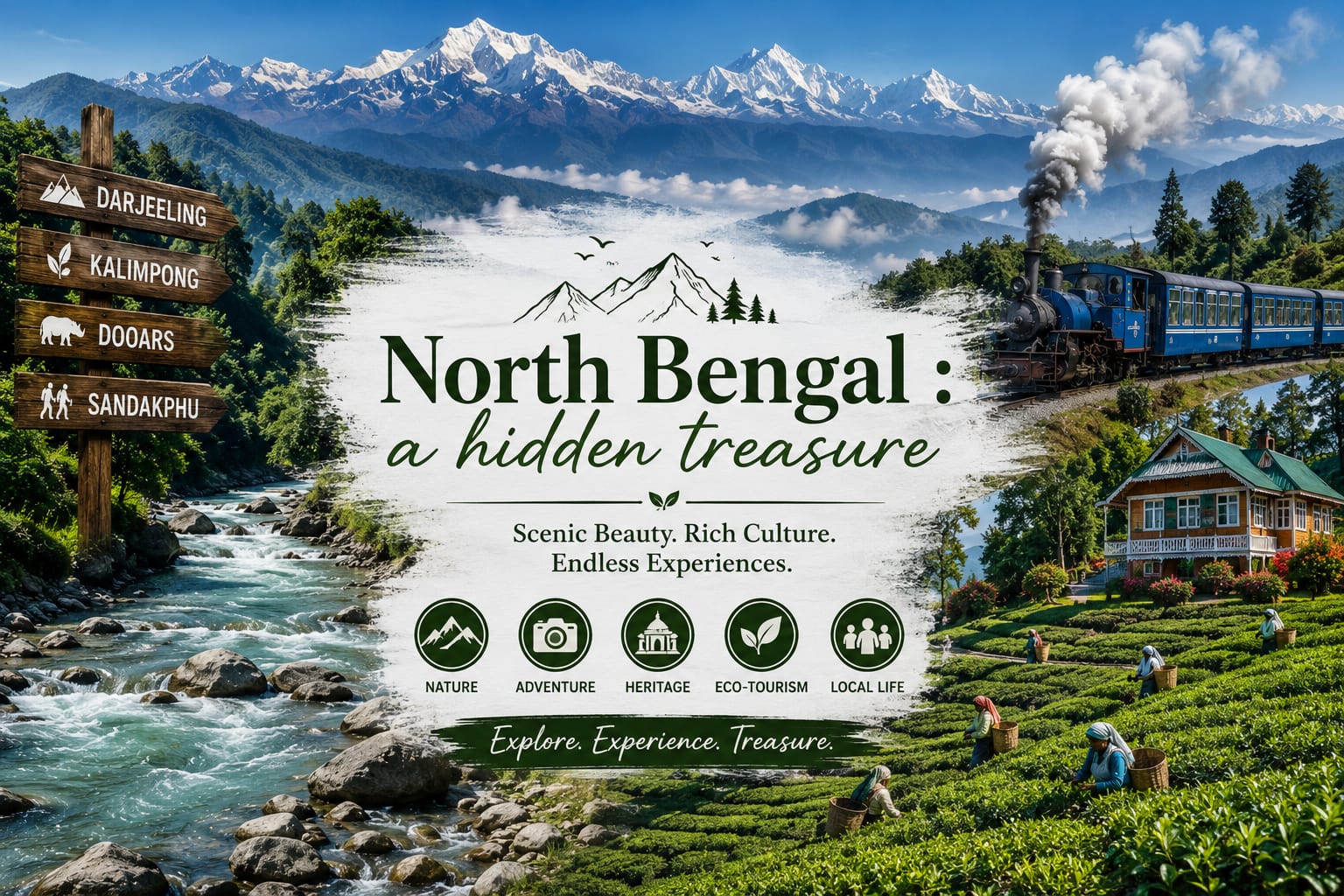
Introduction:Tourism is not merely about travelling, it is a powerful force that transforms local economies, preserves cultural heritage, and creates opportunities for thousands of people. In this regard, North Bengal stands as one of India's most promising tourism destinations. It is known for its green hills, peaceful forests, tea gardens, rivers, and rich wildlife. The natural beauty and pleasant climate make it a favourite destination for both Indian and International tourists.
Evey year, thousands of visitors come to enjoy it's scenic landscapes, local culture, and adventure activities.
Some of the most famous tourist destinations in North Bengal are Darjeeling, kalimpong, Dooars, Sandakphu, and Jaldapara National Park.
Economic Importance:Tourism plays an important role in the economy of North Bengal. It creates employment opportunities in hotels, restaurants, transport, Homestayes, and local shops. Tourism also supports tea gardens, handicrafts, local food businesses, and cultural activities. As more tourists visit the region, local people earn income and however, tourism should develop in a sustainable way.
Sustainable Development:it means meeting the needs of today's tourists without harming nature or reducing resources for future generations. This can be achieved by protesting forests and wildlife, reducing plastic pollution, promoting eco- friendly tourism, encouraging responsible tourist behavior and involving local communities in tourism activities. Sustainable tourism helps protect North Bengal's natural beauty while supporting long - term economic growth.
Why North Bengal is important for Tourism?
Diverse landscape: North Bengal is blessed with a wide variety of natural landscapes. It includes snow- capped Himalayan mountains, rolling hills, dense forests, green tea gardens, rivers, waterfalls, and fertile plains. This geographical diversity makes the region attractive to different types of tourists.
Famous Tea gardens: North Bengal is home to world famous tea gardens. Especially in Darjeeling, Kurseong, and the Dooars. Visitors enjoy tea garden tours tea tasting, and the beautiful scenery.
Darjeeling tea is recognized world wide for its unique quality and flavour.
Rich wildlife : the region has many national parks and wildlife sanctuaries. Jaldapara National Park is famous for the one - horned Rhinoceros, while Gorumara national park, Buxa National Park, and Mahananda wildlife Sanctuary project elephants, leopards, bison, deer and many species of birds.
Adventure tourism: North Bengal offers many adventure activities. Sandakphu is one of the most popular trekking destinations in eastern India. Tourists also enjoy river rafting on the Teesta River, camping, mountain biking, birdwatching, and nature walks.
Historical Importance: North Bengal has several places of historical and cultural significance.
Coach Behar Rajbari reflects the Royal heritage of the koch dynasty. Buxa Fort is known for its role during India's freedom struggle. Coronation bridge near sevoka is an important historical landmark and an engineering marvel. The Darjeeling Himalayan Railway ( Toy Train) is recognised as UNESCO world Heritage Site and is one of the region's greatest tourist attractions.
Pleasant climate: the cool weather of places like Darjeeling, kalimpong, Lava, and Loleygaon attracts visitors throughout the year, especially during the summer season.
Easy connectivity: North Bengal is well connected by Bagdogra airport , New Jalpaigudi (NJP) Railway station, and a network of national highways. This makes travelling to different tourist destination convenient.
Recent tourism Development in North Bengal.
In recent years, the Government of West Bengal has taken several steps to improve tourism in North Bengal.
The government has launched various tourism projects to promote North Bengal as a major tourism destination.
Better roads , better transport like railway, and air connectivity through New Jalpaigudi and Bagdogra Airport has increased tourist access.
Eco - tourism is being encouraged in forest and village areas such as Lataguri, Jaldapara, and Gorumara to protect nature while supporting local communities.
The government is promoting offbeat destinations such as Lepchajagat, sittong, chatakpur and Samsing to reduce pressure on overcrowded tourist spots and spread tourism benefits.
Economic Impact:Tourism plays a major role in the economy of North Bengal. it creates a chain of economic activities that benefits many people, not only hotel owners.
Drivers, tour guides, farmers, artisans, local shopkeepers, and restaurant owners also earn income from tourism. The growth of tourism has increased the demand for local food products, improved the transport sector, and promoted tea tourism especially in the tea gardens of Darjeeling and Dooars. As a result, tourism supports local businesses creates employment opportunities and contributes to the overall economic development of the region.
Challenges: Despite its tourism growth, North Bengal faces several challenges environmental pollution, plastic waste, traffic congestion, deforestation, pressure on wildlife, climate change, over tourism threaten the region's natural beauty and biodiversity. Therefore, proper planning, responsible tourism, and effective conservative measures are essential to ensure sustainable tourism development.
Suggestions:
North Bengal should promote eco- friendly tourism, ensure strict waste management, involve local communities, expand digital promotion, provide skill development programs, improve education, improve health care facilities, and control unplanned nature, improve tourists experiences, and support sustainable tourism and long term economic growth.
Conclusion:
North Bengal has great potential to become an international tourism hub. By promoting sustainable tourism, it can protect both the economy and the environment while creating more employment opportunities for young people. With proper planning and responsible development, North Bengal can achieve long term growth and remain one of India's finest tourist destination.