The project of ken -Betwa river, a new opportunity or a rising chaos for locals!
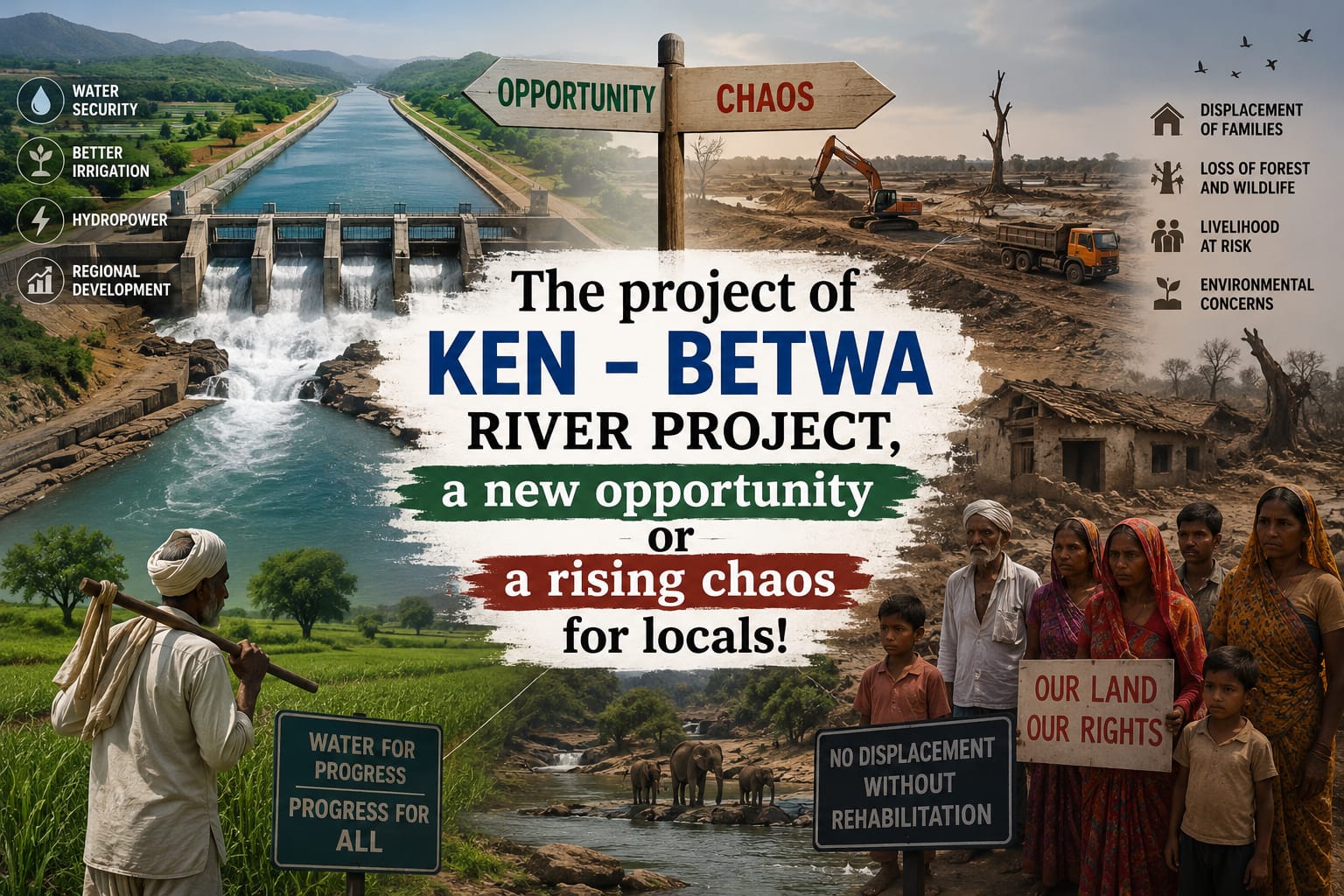
Introduction- the recent protest held in kupi village, located in Madhya Pradesh's chhatarpur district, near the Barana river, where tribal residents organised demonstrations against the ken - Betwa river link project.
Why has it attracted public attention?
The protest shows how hard it is to build big projects while protecting the rights of local people. It's a peaceful protests because here peaceful marches and the participation of tribal groups have caught everyone's attention.
The project aim–the government launched the Ken - Betwa river link project to address water shortages in draught - prone areas of Madhyapradesh and uttarpradesh.
Main aim to provide more water for farming, supply drinking water to people, support industrial development, and improve the overall economy of the region. It is also expected to reduce the impact of recurring draughts and increase agricultural productivity.
Why are people protesting?
People are protesting because they believe the project will have a serious impact on their lives and the environment. Their main concerns are - land acquisition, displacement of families and affecting their livelihoods. Worried about compensation and rehabilitation, and also environmental concerns.
Government response:
The Government has taken several steps in response to the protests. Police removed protestors from the demonstrations site and detained several participant's in mid - July to restore public order. A medical team was sent to the protest site to monitor the health of the hunger- striking protesters and provide medical assistance when needed. District administration officials held discussions with the protest leaders to understand their concerns and assured them that their complaints would be carefully reviewed. Following these assurances, protect leader Amit Bhatnagar conditionally suspended his 18 day hunger strike, while continuing to seek fair rehabilitation and proper compensation for the affected families. The government also issued official orders to identify all genuinely affected families who are eligible for rehabilitation and compensation under the projects policies.
Is development possible without affecting local communities?
Development is important, but it should not come at the cost of local communities. While some impact maybe unavoidable in large projects, careful planning, fair compensation, proper rehabilitation , economic growth, and community participation can reduce harm and make development more inclusive.
How can Governments balance economic growth with human rights?
The government can balance economic growth with human rights by consulting local communities before starting projects, ensuring fair compensation, providing proper rehabilitation, protecting environment, and respecting the rights and dignity of effected people. Development should improve people's live rather than create new hardships.
Can the government improve the lifestyle of local residents if the project is successful?
Maybe it's possible. However, the improvement in people's lives will depend not only on the completion of the project but also on how effectively the government. Supports effected through - rehabilitation, facilities, healthcare education and othe public services. Without there measures the benefits of the project may not reach everyone equally.
Conclusion:
If the project is completed successfully the government's responsibility should not end with construction. The real success of the project will depend on whether it improves the lives of the effected people.
The government should provide modern irrigation facilities, reliable pumping systems for farmland, quality seeds fertilizersand pesticides at affordable prices. Farmers should also receive proper training farming techniques so that families living in draught - prone areas can adapt to new opportunities and agriculture productivity.
Wildlife should be also be protected. If forests are cleared and animal lose their natural habitats, the government should existing wildlife sanctuaries.
Environmental conservation must be give equal importance. For every tree removed during the project, new trees should be planted in suitable nearby areas. Afforestation should be treated as a long term responsibility rather than an one - time activity.